Know your liquid future·Liquid intelligence·Powered by CaskIQ
Stillbound Research

Whiskey & the wood that makes it.

Explore 17 woods through the Irish whiskeys they shape. Choose a cask to begin.

Anatomy of a cask

Take it apart. Look within.

Hoops, staves, heads and bung. Then closer, into the char.

Open the full cask study ↗
The wood library

The timber. All seventeen.

Where it grows, what it brings, and whiskeys to explore. Know another? Add it to the list.

American white oak cask end
01 · oak

American white oak

Quercus alba
Eastern United States: Missouri, the Ozarks, Kentucky, the Appalachians

The workhorse. American law says bourbon must go into new charred oak and never reuse the barrel, so every year the United States produces a flood of once-used casks that the rest of the world buys cheaply. Irish whiskey has matured mostly in ex-bourbon American oak for as long as anyone has written it down. Teeling uses it as the plain baseline its Wonders of Wood series is measured against.

What it gives
  • Vanilla, coconut and honey from the oak's lactones and lignin
  • A light, sweet, clean frame that lets the spirit show
  • Consistent: the most studied and most predictable cask in whiskey
What makes it hard
  • Nothing about supply. Bourbon's rules keep it plentiful and cheap
  • So familiar that it rarely makes a story on its own
  • First-fill and refill behave very differently; the record has to say which
Whiskeys to exploreBushmills, core rangefull maturation · Jameson, core rangefull maturation · Killowen, Barántúilfull maturation
Explore the cask in 3D ↗
Sources & notes
Product evidence: mixedAttributes: Stillbound notes and published papers
Mizunara oak cask end
02 · oak

Mizunara oak

Quercus crispulaprovisional
Hokkaido and northern Honshu, Japan

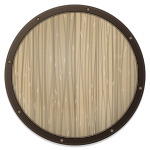
Japan's oak entered whisky in the 1940s when war made imported barrels impossible to get, and Suntory has spent eighty years learning to live with it. In Irish whiskey it appears in the Method and Madness 33 Year Old, and at Glendalough, which has worked since 2015 with what it describes as Japan's only independent cooperage: Hokkaido wood, seasoned in Miyazaki, two small batches a year.

What it gives
  • Sandalwood, incense and spice, the notes that made Yamazaki famous
  • Coconut sweetness in the first fifteen years, temple incense after twenty-five, in Suntory's own account (producer-reported)
  • Rarity: under 1% of Suntory's casks
What makes it hard
  • Suntory's own words: "difficult to manipulate, permeable and prone to leaking"
  • The tree takes two to three times longer to mature than European or American oak
  • About a month to cooper one cask, against a day for a standard barrel, per Glendalough's founders
  • No open market. Access is a relationship with a cooperage, not a price list
Sources & notes
Product evidence: mixedAttributes: Stillbound notes and published papersNot to be confused with Mongolian oak, Quercus mongolica, which some labels use loosely for the same wood. We keep them separate until a producer names the species.
Garryana oak cask end
03 · oak

Garryana oak

Quercus garryanaprovisional
Pacific Northwest of North America: Oregon, Washington, British Columbia

Garry oak is the only oak native to Washington and British Columbia. Westland in Seattle built a whole series on it from 2016 as a statement about American single malt having its own wood. Method and Madness brought it to Irish whiskey as a limited edition.

What it gives
  • Dense, tight-grained oak with heavy tannin and strong colour
  • Dark, savoury notes: coffee, molasses, burnt sugar rather than white-oak vanilla (producer-reported)
  • Used new, so it works fast and speaks loudly
What makes it hard
  • Small, slow, often crooked trees. Clean staves are scarce
  • Not a commercial cooperage timber; casks are commissioned a few at a time
  • Conservation concern across much of its range
Sources & notes
Product evidence: producerAttributes: Stillbound research plus general cooperage knowledgeSpecies named by the producer; still to be checked against a botanical authority.
Hungarian oak cask end
04 · oak

Hungarian oak

Quercus petraea
Hungary, the Zemplén hills and the Carpathian basin

Hungary's oak built its reputation in Tokaj wine cellars long before whiskey looked at it. The Zemplén hills grow slow, tight-grained sessile oak on volcanic soil. Method and Madness used it for a Single Pot Still limited edition and, unusually for this list, printed the species on the label: Quercus petraea.

What it gives
  • Tight grain and slow, gentle extraction
  • Spice and tannin in the French oak family, with a softer edge (producer-reported for whiskey; well documented in wine)
  • A named species, which is rare here
What makes it hard
  • Provenance inside Hungary is not on the label
  • Cooperage supply is wine-led: Hungary sells roughly 50,000 oak barrels a year, mostly to winemakers
  • Whiskey-format casks are a special order
Sources & notes
Product evidence: mixedAttributes: Stillbound notes and published papers
Spanish oak cask end
05 · oak

Spanish oak

Quercus pyrenaicaunresolved
Northern Spain and the Iberian uplands; also the sherry bodegas of Jerez, where most whiskey meets it second-hand

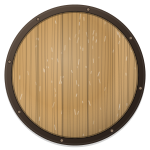
Most Irish whiskey meets Spanish oak second-hand, as a sherry butt from Jerez. Used new, it is a different animal. Method and Madness Single Grain matured in virgin Spanish oak is the documented Irish use of the fresh timber.

What it gives
  • High tannin and deep colour, more of both than American oak
  • Dried fruit, spice and dry wood when used new (producer-reported)
  • The wood underneath almost every sherry cask, so its character is already in the category's DNA
What makes it hard
  • Coarser grain than French oak; more leakage when coopered new
  • Virgin Spanish oak can take over a spirit quickly
  • "Spanish oak" is a place, not a species, until the producer says which
Whiskeys to exploreMethod and Madness, Single Grainfull maturation
Sources & notes
Product evidence: producerAttributes: general cooperage knowledge, not yet sourcedThe producer page does not name the species. Quercus pyrenaica is our working assumption, not a fact.
Chinkapin oak cask end
06 · oak

Chinkapin oak

Quercus muehlenbergiiunresolved
Central and eastern United States, from Texas to the Great Lakes

A white oak cousin from the American heartland that cooperages have started to season and sell under its own name. Teeling opened its Wonders of Wood series with it in 2021, the first Irish whiskey to name it on a label.

What it gives
  • Behaves like white oak: vanillin, coconut, sweetness
  • Tighter grain than much commercial white oak (producer-reported)
  • Virgin use, so colour and extraction come early
What makes it hard
  • Rarely separated from Quercus alba in the supply chain; hard to buy as a named timber
  • Small batches only
  • The label says "American white oak", which is loose; the species is inferred
Sources & notes
Product evidence: producerAttributes: general cooperage knowledge, not yet sourcedSpecies is our working identification, not the producer's.
Portuguese oak cask end
07 · oak

Portuguese oak

Species not statedunresolved
Northern and central Portugal

Portugal's oak reaches whiskey mostly inside port pipes. Teeling's Wonders of Wood edition 2 used it new, which is a much rarer thing.

What it gives
  • European oak character: tannin, spice, dried fruit
  • Gentler than Spanish oak in the producer's telling (producer-reported)
  • New wood, so colour arrives fast
What makes it hard
  • A provenance label, not a species. The tree could be robur, pyrenaica or faginea
  • Little cooperage supply outside the wine trade
  • Not enough public evidence yet to separate it from other European oaks
Sources & notes
Product evidence: producerAttributes: general cooperage knowledge, not yet sourcedSpecies not stated anywhere we can find.
Swedish oak cask end
08 · oak

Swedish oak

Species not statedunresolved
Southern Sweden, at the northern edge of oak's range

Oak from the northern edge of its range grows slowly and tight. Sweden's oak built its navy; Teeling's Wonders of Wood edition 3 put it in a whiskey cask, new.

What it gives
  • Very tight grain; extraction is slow and fine
  • Spice and dry wood rather than sweetness (producer-reported)
  • Scarce enough to be the story
What makes it hard
  • Tiny cooperage supply, and Swedish distillers want it too
  • Slow-grown oak is expensive per stave
  • Species not named; almost certainly Quercus robur
Sources & notes
Product evidence: producerAttributes: general cooperage knowledge, not yet sourcedSpecies not stated by the producer.
Carpathian oak cask end
09 · oak

Carpathian oak

Species not statedunresolved
The Carpathian mountains: Romania, Ukraine, Slovakia, Hungary

Mountain oak from Romania, Ukraine, Slovakia and Hungary, a cooperage staple for wine and brandy across central Europe. Teeling's Wonders of Wood edition 4 was matured in virgin Carpathian oak.

What it gives
  • Sessile-oak character close to French and Hungarian oak: spice, gentle tannin
  • Fine grain from mountain growth
  • Cheaper than French oak for similar structure
What makes it hard
  • Overlaps with Hungarian oak, and may be the same species from a different valley
  • Wine-led supply; whiskey casks are a special order
  • Species not stated
Whiskeys to exploreTeeling Whiskey, Wonders of Wood, edition 4full maturation
Sources & notes
Product evidence: producerAttributes: general cooperage knowledge, not yet sourcedWe count this as a commercial identity, not a separate species. It may be botanically the same tree as Hungarian oak.
Irish oak cask end
10 · oak

Irish oak

Quercus robur and/or Quercus petraeaprovisional
Ireland; estate and native woodlands in Wicklow, Waterford, Meath, Tipperary

Irish oak went into Irish whiskey in the 1820s, according to Midleton's own purchase records, and then stopped for the best part of a century. Ireland had almost no trees left: 1.5% forest cover by 1903. Midleton revived it in 2015 with Dair Ghaelach, ten 130-year-old trees from Grinsell's Wood in Kilkenny, seasoned and coopered in Jerez. Glendalough and Burren have followed. In August 2026 Boann had three casks made from a 1,000-year-old oak that Storm Elin brought down on the Preston Estate in Meath, seasoned two years in the Vosges, then coopered in Ireland by Ian Leonard. The first complete Irish oak casks coopered by Irish hands on Irish soil in over a century.

What it gives
  • Higher tannin and spice than American oak, with dried fruit
  • Tight grain from slow Irish growth
  • A story no other wood on this list can tell
What makes it hard
  • Ireland's native woodland is under 2% of the island. There is no supply, only projects
  • No seasoning or coopering at scale at home: Dair Ghaelach went to Jerez, Storm Elin to the Vosges
  • Three casks from a thousand-year-old tree is the current unit of production
  • Nobody has yet done what Fettercairn did in Scotland and planted oak for whiskey
Sources & notes
Product evidence: mixedAttributes: Stillbound researchIrish oak is one of two native species, robur or petraea. Provenance, not botany. Which one the Preston tree was is still an open question.
Sweet chestnut cask end
11 · not oak

Sweet chestnut

Castanea sativa
Southern Europe, France, Italy; naturalised in Ireland and Britain

Chestnut has been quietly inside Irish Distillers' portfolio for years: a Method and Madness Single Pot Still finished in chestnut, and a chestnut component in Jameson Triple Triple. In July 2026 a US label approval surfaced for a Midleton Very Rare Irish Chestnut Edition, single pot still finished in virgin Irish sweet chestnut hogsheads from Cappoquin House in Waterford, 56.1%, non-chill-filtered. A label approval is not a launch. Irish Distillers has not announced it.

What it gives
  • Low vanillin and soft tannin: rounder, less oaky, more nutty
  • Chestnut has a long cooperage history in Italy and France for wine and spirits
  • Irish-grown chestnut gives a second native-wood story after oak
What makes it hard
  • More porous than oak: higher evaporation and a shorter working life
  • Not oak, so it cannot be used for Scotch, and its status differs by jurisdiction
  • Coopered in small numbers, to order
Sources & notes
Product evidence: mixedAttributes: Stillbound notes and published papersThe Midleton Very Rare Irish Chestnut Edition is label-approved and not announced. We will say "launched" when Irish Distillers does.
Japanese chestnut cask end
12 · not oak

Japanese chestnut

Castanea crenataunresolved
Japan and Korea

A different chestnut from the European tree, native to Japan and Korea. Method and Madness used it for a limited edition, finished in Japanese chestnut casks.

What it gives
  • Chestnut character: low vanillin, soft tannin, a rounder spirit
  • Nuttiness and gentle spice (producer-reported)
  • A new direction in a category that is almost all oak
What makes it hard
  • Porous like all chestnut; leakage and evaporation
  • Not a cooperage timber in Japan; casks are made to order
  • Species inferred from the name, not stated
Sources & notes
Product evidence: producerAttributes: general cooperage knowledge, not yet sourcedCastanea crenata is our working identification.
Acacia cask end
13 · not oak

Acacia

likely Robinia pseudoacacia (black locust), not true Acaciaunresolved
Native to eastern North America, naturalised across Europe; grown for cooperage in Hungary, Romania and France

What coopers call acacia is almost always black locust, Robinia pseudoacacia, an American tree naturalised across Europe and grown for barrels in Hungary, Romania and France. Wine and some Hungarian spirits have used it for generations. Method and Madness brought it to Irish whiskey as a finishing cask.

What it gives
  • Almost no tannin or vanillin, so the spirit stays pale and the wood stays in the background
  • Honey, floral and light spice (producer-reported)
  • Hard, rot-resistant timber; the casks last
What makes it hard
  • The name is botanically wrong. Black locust is not an Acacia
  • Dense and hard to bend; breakage in the cooperage
  • Not oak, so off-limits for Scotch
  • Too little whiskey history to know what long maturation does
Sources & notes
Product evidence: producerAttributes: Stillbound research plus general cooperage knowledgeSpecies unresolved and commonly mislabelled across the trade.
Wild cherry cask end
14 · not oak

Wild cherry

likely Prunus aviumprovisional
Europe and western Asia; Prunus avium, the sweet cherry tree

Fruit-spirit coopers in Italy and France have used cherry for a long time. Method and Madness used a solid wild cherry cask. Teeling's Cherry Wood Cask was a cherry and oak hybrid, cherry heads on oak staves, which says something about how hard solid cherry is to keep tight.

What it gives
  • Soft tannin, light colour, a reddish tint in the wood itself
  • Red fruit, almond and a lighter sweetness (producer-reported)
  • A finishing wood; weeks or months, not years
What makes it hard
  • Porous and prone to leaking; usually a finish, rarely a full maturation
  • Small trees make short staves; supply is limited
  • Not oak, so not for Scotch
  • Species is inferred
Sources & notes
Product evidence: mixedAttributes: Stillbound research plus general cooperage knowledgePrunus avium is a working identification for both products.
Amburana cask end
15 · not oak

Amburana

Amburana cearensisprovisional
Brazil and the drier forests of South America

Amburana is the cachaça cooper's wood. Brazilian distillers have used it for generations and know exactly how loud it is. Method and Madness and Teeling both brought it to Irish whiskey, and it has become the most talked-about non-oak wood in the category.

What it gives
  • Cinnamon, vanilla and tonka bean, strong enough to show from a short finish
  • Colour comes quickly
  • A profile nothing in the oak family gives
What makes it hard
  • Assertive to the point of taking over; finishes are measured in weeks
  • Listed as vulnerable in its native range; sourcing has to be checked
  • Casks come from Brazil in small numbers, at cost
Sources & notes
Product evidence: producerAttributes: general cooperage knowledge, not yet sourced
Mulberry cask end
16 · not oak

Mulberry

Morus alba
White mulberry, Morus alba: native to China, grown across Asia and southern Europe

Mulberry casks are a tradition in Armenian and Georgian brandy. Method and Madness used one for Irish whiskey and, rarely for this list, printed the species: Morus alba, the white mulberry.

What it gives
  • Moderate tannin and a golden colour
  • Dried fruit and honey (producer-reported)
  • A named species
What makes it hard
  • Not a European or American cooperage timber; casks come from brandy country
  • Softer than oak; nobody knows how it holds up over long maturation
  • One Irish product so far
Sources & notes
Product evidence: producerAttributes: general cooperage knowledge, not yet sourced
Japanese cedar (sugi) cask end
17 · not oak

Japanese cedar (sugi)

Cryptomeria japonicaprovisional
Japan, where it is the national timber

Sugi is Japan's national timber and the wood of sake casks and shrine barrels. Method and Madness took a sake cooperage tradition and put whiskey in it for a limited edition.

What it gives
  • Resinous, aromatic softwood: fresh pine and incense that no hardwood gives
  • Very fast, so used for short finishes
  • The one conifer on the list
What makes it hard
  • Softwood. Resin and porosity rule out long maturation
  • Sake coopers build with cedar; whiskey-format casks are rare
  • Not oak; not for Scotch
  • Species provisional until the producer confirms it
Sources & notes
Product evidence: producerAttributes: Stillbound research plus general cooperage knowledgeWhether the cask timber is truly Cryptomeria japonica is unverified.
Beyond the tree

The second life of a cask.

Wood is part of the story. Heat, previous fills and finishing add another layer: bourbon, sherry, port, wine and more.

Virgin oak cask end

Virgin oak

new, unseasoned European or American oak

New oak with no previous fill. The wood, not a life, but it belongs here because it is the zero point every other entry is measured from. Required for bourbon; optional for Irish and Scotch.

  • The full extraction load: colour, tannin, vanillin and spice, fast
  • The wood's own character, undiluted
  • Over-oaking is the risk; virgin oak can bury a spirit in months
  • Expensive: a new cask costs several times a used one
Charred oak cask end

Charred oak

usually American white oak (bourbon-format casks)

The inside of the cask set alight and burnt to a layer of carbon. A treatment, not a wood. Bourbon must have it; Irish and Scotch may.

  • A layer of charcoal that filters harshness and opens the wood beneath
  • Three years in charred oak scored higher on mature character and lower on immature notes than uncharred oak in a controlled study (Clyne et al., 1993)
  • The chemistry does not fully explain the sensory effect; char does more than the measured compounds account for
  • Char level and method have to be recorded. "Charred" is not one thing
Toasted oak cask end

Toasted oak

European or American oak

Heat applied slowly to the inside of the cask without setting it alight. Gentler than char, and used on its own or under it.

  • Heat changes the lignin, hemicellulose, lactones and phenols in the wood
  • Mint and floral notes in whisky are traced to oak terpenoids (Picard et al., 2023)
  • What separates toast from char in the spirit is not yet well sourced. An open question
Ex-bourbon cask end

Ex-bourbon

American white oak (Quercus alba)

The cask that made Irish whiskey what it is. American white oak, charred, one fill of bourbon, then sold on because the law says so.

  • Vanilla, coconut and honey
  • Light, clean and predictable
  • Not hard at all. The industry's dominant, cheap, reliable cask, which is exactly why nobody talks about it
Bushmills, core range · Jameson, core range (mostly ex-bourbon) · Killowen, Barántúil
Oloroso sherry cask end

Oloroso sherry

usually European oak (Spanish bodega casks)

A cask seasoned with oloroso, the fuller, oxidatively aged sherry. Usually European oak from a Jerez bodega.

  • Dried fruit, nuts and leather
  • The deepest colour of the common sherry casks
  • Almost every "sherry cask" today was seasoned for whiskey, not aged sherry for decades. The record should say which
Burren Distillers, ex-oloroso sherry casks (part of maturation programme) · Redbreast / Spot range, oloroso-cask component of house style
PX (Pedro Ximénez) sherry cask end

PX (Pedro Ximénez) sherry

usually European oak (Spanish bodega casks)

A cask seasoned with Pedro Ximénez, the sweetest, darkest sherry. Same oak as oloroso, a different life.

  • Raisin, syrup and weight
  • Fast, obvious influence, so used for short finishes
  • Easy to overdo
  • Same seasoning question as oloroso: how long, and was it sherry or a seasoning wine
Fino / Manzanilla sherry cask end

Fino / Manzanilla sherry

usually European oak (Spanish bodega casks)

The pale, dry sherries, aged under a layer of flor yeast rather than open to air. A rarer whiskey cask than oloroso or PX.

  • Salinity, almond and a dry edge rather than sweetness
  • Scarce; bodegas keep their fino casks in the solera
  • No Irish example documented in our sources yet
Port cask end

Port

usually European oak (Portuguese pipe casks)

A pipe or hogshead that held fortified Port. Usually European oak from the Douro.

  • Red fruit and tannin
  • High tartaric acid residue from the fortified wine
  • Ruby and tawny leave very different casks; the record should say which
Burren Distillers, port casks (part of maturation programme) · Bushmills, port cask used on some releases
Rum cask end

Rum

usually American oak (often already ex-bourbon before rum use)

A cask that held rum, often an American oak barrel that was ex-bourbon before it was ex-rum.

  • Sweetness and a rounded, tropical edge
  • Nobody can count them. A global rum-cask total is not defensible from public data
Killowen, Signature Rum & Raisin, dark rum cask finish · Teeling Whiskey, Small Batch (rum cask component)
Cognac / brandy cask end

Cognac / brandy

French oak, typically Limousin

French oak, usually Limousin, whose wide, open grain gives up tannin and aromatics fast. Unsuited to fine wine, ideal for Cognac.

  • Rapid tannin, vanillin and aroma from the coarse Limousin grain
  • Cognac houses reuse their casks for decades; the ones that leave are tired
Beer (stout / IPA) cask end

Beer (stout / IPA)

American oak, usually an ex-bourbon barrel loaned to a brewery

A whiskey barrel lent to a brewery for a stout or IPA and taken back. A real category, and one we could not tie to a named Irish product this time.

  • Roast and chocolate from stout; hop aromatics from IPA
  • Beer residue is fragile; casks need to be refilled quickly
  • No Irish example documented in our sources yet. Tell us one
Hybrid cask cask end

Hybrid cask

mixed, different oak species, or oak combined with a non-oak wood, in staves and/or heads

A cask built from more than one wood: oak staves with cherry heads, or two oak species in one barrel.

  • A way to use a difficult wood, like cherry, without trusting it to hold liquid on its own
  • "Hybrid" says nothing until you record which parts are which wood
Stave insert cask end

Stave insert

additive oak staves or 'dominoes' placed inside an otherwise separate cask

Wood added inside a cask: staves, spirals or dominoes of another timber dropped into an ordinary barrel.

  • Wood influence without a new cask; fast and cheap
  • Has to be recorded separately from the cask itself, or the cask record lies
  • Legal status differs by jurisdiction
Keep exploring

Want to learn more?

The ask

What wood are we missing?

Know a wood we should include? Tell us the whiskey, the wood and its story. A producer link helps us follow it up.

Sources & research notes

The library follows named woods used in Irish whiskey, including regional oak names. Species and flavour claims are qualified in each entry where the evidence is incomplete.

  1. burrendistillers.com/
  2. house.suntory.com/stories/the-mysteries-of-mizunara
  3. powo.science.kew.org/taxon/urn%3Alsid%3Aipni.org%3Anames%3A295349-1
  4. teelingdistillery.com/news/cherry-wood-cask/
  5. teelingdistillery.com/news/teeling-whiskey-wonders-of-wood-series/
  6. teelingdistillery.com/news/wonders-of-wood-amburana-cask/
  7. teelingdistillery.com/product/wonders-of-wood-4-virgin-carpathian-oak/
  8. thewhiskeyjug.com/irish-whiskey-news/irish-distillers-midleton-releases-dair-ghaelach-irish-whiskey-finished-in-virgin-irish-oak/
  9. ttbonline.gov/colasonline/viewColaDetails.do?action=publicDisplaySearchBasic&ttbid=26183001000156
  10. us.glendaloughdistillery.com/whiskeys
  11. whiskeyreviewer.com/2015/03/irish-oak-coming-back-to-irish-whiskey_030215/
  12. coillte.ie/a-brief-history-of-irelands-native-woodlands/
  13. decanter.com/spirits/mizunara-oak-explained-526736/
  14. forestryfocus.ie/forests-woodland/history-of-irish-forestry/forestry-since-tudor-times/
  15. jamesonwhiskey.com/en-us/our-whiskey/jameson-triple-triple/
  16. killowendistillery.com/whiskey/
  17. methodandmadnesswhiskey.com/en-us/product/single-pot-still
  18. methodandmadnesswhiskey.com/en/product/33-yo-mizunara-cask
  19. methodandmadnesswhiskey.com/en/product/acacia-wood
  20. methodandmadnesswhiskey.com/en/product/amburana-wood-edition
  21. methodandmadnesswhiskey.com/en/product/garryana-oak
  22. methodandmadnesswhiskey.com/en/product/limited-edition-japanese-cedarwood-casks
  23. methodandmadnesswhiskey.com/en/product/limited-edition-japanese-chestnut-casks
  24. methodandmadnesswhiskey.com/en/product/mulberry-cask
  25. methodandmadnesswhiskey.com/en/product/single-grain
  26. methodandmadnesswhiskey.com/en/product/single-pot-still-hungarian-oak-limited-edition
  27. methodandmadnesswhiskey.com/en/product/wild-cherry-wood
  28. redbreastwhiskey.com/en-us/whiskey-collections/redbreast-moscatel-wine-cask-edition/
  29. rte.ie/news/2026/0805/1586466-whiskey-oak-storm/
Corrections

If you hold better evidence, we would rather publish your wood than our gap.

Write to hello@stillbound.ai or use the form above. Corrections are logged and dated on this page. First edition 13 September 2026.

Help build the wood library

Submit a whiskey

Suggestions go to the Stillbound team for review.